 en
 Español
 عربى

News ·
News ·
News ·
News ·
News ·
News ·
News ·
News ·
News ·
News ·
News ·
News ·
News ·
News ·
News ·
News ·

Posted by JUDUN
Importing Hydraulic Lifting Tools: Which Safety Documents Should Buyers Request
Importing hydraulic lifting equipment involves more than comparing prices, load capacities, and delivery arrangements. Buyers also need to verify product identification, test records, operating instructions, and the documents required by the destination market. Missing or inconsistent paperwork can complicate customs clearance, product acceptance, and subsequent distribution.
At Judun, we understand that distributors, industrial buyers, and equipment importers need clear technical information before confirming an order. A hand lifting tool jack must match the intended application, and its supporting documentation should make the rated capacity, operating limits, and inspection requirements easy to verify.
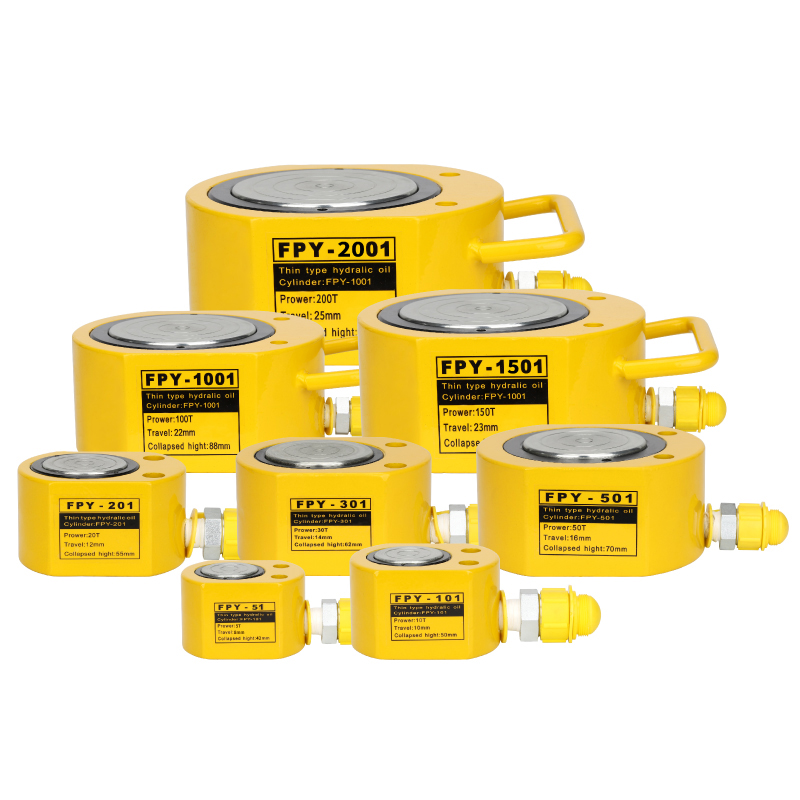
1. Request a Product Specification Sheet
The specification sheet establishes the technical reference for the purchased equipment. Buyers should request a document that identifies the exact model and its relevant operating parameters.
- Rated lifting capacity: Confirm the stated load rating and the conditions under which it applies.
- Stroke and dimensions: Check the working stroke, retracted height, extended height, and mounting dimensions.
- Operating pressure: Verify the specified hydraulic pressure and the compatibility of associated components.
- Product identification: Match the model number, product code, and description against the quotation and purchase order.
At Judun, we recommend checking these details against the approved product configuration rather than relying on a general catalogue description. This is particularly important for extended-stroke hydraulic cylinders, where dimensions and operating limits affect installation suitability.
2. Ask for Load Test and Inspection Records
Test documentation helps buyers evaluate whether the equipment has undergone the inspections and tests specified for its design. Request the manufacturer's applicable load-test certificate, proof-test report, or factory inspection record.
- Test identification: The report should identify the tested model and, where applicable, its serial number or production batch.
- Test conditions: Check the test procedure, applied load or pressure, and acceptance criteria.
- Inspection results: Review relevant findings concerning leakage, structural condition, and functional operation.
- Traceability: Confirm that the records correspond to the supplied equipment.
Applicable testing requirements depend on the equipment category and governing standard. ASME B30.1 addresses hydraulic jacks and includes provisions for proof testing and inspection. Buyers should confirm the applicable edition and contractual requirements instead of assuming that one test procedure applies to every jack.
3. Verify the Declaration of Conformity and Applicable Certifications
Import requirements vary by destination, product classification, and intended use. Buyers should identify the relevant regulatory framework before requesting certificates or approving product markings.
- Declaration of Conformity: Request the applicable declaration where required, including product identification and the relevant legislation or standards.
- Certification records: Ask for certificates required by the destination market or project specification.
- Quality management documents: Request an ISO 9001 certificate when supplier qualification or the purchasing contract calls for it.
- Third-party reports: Confirm whether independent testing or certification is mandatory or required by the buyer.
A quality management certificate does not automatically prove that a particular jack complies with every product safety requirement. Likewise, a test report should not be treated as a substitute for a legally required conformity document. Each document serves a different purpose.
4. Obtain the Operating and Safety Manual
Operating instructions are essential for distributors, installers, and end users. The manual should explain how to use the equipment within its rated limits and identify conditions that could create a safety hazard.
Buyers should check that the manual covers:
- Correct setup, positioning, and load contact.
- Rated capacity and restrictions on operating orientation.
- Safe lifting procedures and precautions against unexpected load movement.
- Inspection intervals, hydraulic fluid requirements, and relevant maintenance instructions.
- Procedures for identifying defects and removing damaged equipment from service.
Confirm the required manual language before shipment. Importers placing machinery on the UK market, for example, should review the applicable instructions, safety information, marking, and conformity documentation requirements.
5. Check Product Markings and Shipping Documents
Documentation should agree with the physical product and the shipment details. Before dispatch, buyers should request clear photographs or records of the product label where appropriate.
- Product label: Verify the manufacturer identity, model designation, rated capacity, and other required markings.
- Commercial invoice: Check product descriptions, quantities, prices, and buyer details.
- Packing list: Confirm package counts and the correspondence between the shipment and order.
- Transport documents: Confirm the documents required by the selected shipping method and destination.
Customs documentation and product safety documentation are separate matters. A complete invoice and packing list do not establish technical conformity, so both groups should be reviewed independently.
6. Use a Document Checklist Before Shipment
At Judun, we encourage buyers to establish a document list during quotation and order confirmation rather than waiting until the goods are ready to ship.
- [ ] Approved product specification sheet and model identification.
- [ ] Applicable load-test certificates and inspection records.
- [ ] Required declaration of conformity and supporting certifications.
- [ ] Operating manual and safety instructions in the required language.
- [ ] Product marking details and traceability information.
- [ ] Commercial invoice, packing list, and transport documents.
Not every shipment requires every document listed above. The final checklist should reflect local regulations, the specific product, and any additional requirements agreed upon by the buyer and supplier.
Prepare Your Hydraulic Lifting Tool Order with Judun
At Judun, we work with buyers to clarify product specifications and documentation requirements before an order is finalized. Providing the destination country, intended application, required capacity, and applicable project standards helps us identify the information needed for a more complete purchasing review.
Contact our team to discuss hydraulic lifting tools and the technical documents relevant to your order. Reviewing the product configuration and required paperwork together gives importers a clearer basis for supplier evaluation, shipment preparation, and downstream distribution.
Don't miss out. Contact us to get the latest information!

Products
Contact US
Taizhou Judun Tools Co., Ltd.
Jungang Village, Chumen Town, Yuhuan City, Zhejiang Province
Tel: +86-13967698556
E-mail: judungongju@163.com
Copyright © Taizhou Judun Tools Co., Ltd.. All rights reserved.
