 en
 Español
 عربى

News ·
News ·
News ·
News ·
News ·
News ·
News ·
News ·
News ·
News ·
News ·
News ·
News ·
News ·
News ·
News ·

Posted by JUDUN
Electric Hydraulic Systems: Which Specifications Belong in an OEM Contract
An OEM hydraulic equipment contract needs more than a product name, a rated capacity, and an agreed price. Pump performance, cylinder dimensions, electrical requirements, control functions, and acceptance criteria all influence whether the delivered assembly fits the intended machine. At Judun, we believe that defining these details before production helps both parties establish clear technical expectations and reduce misunderstandings during equipment integration.
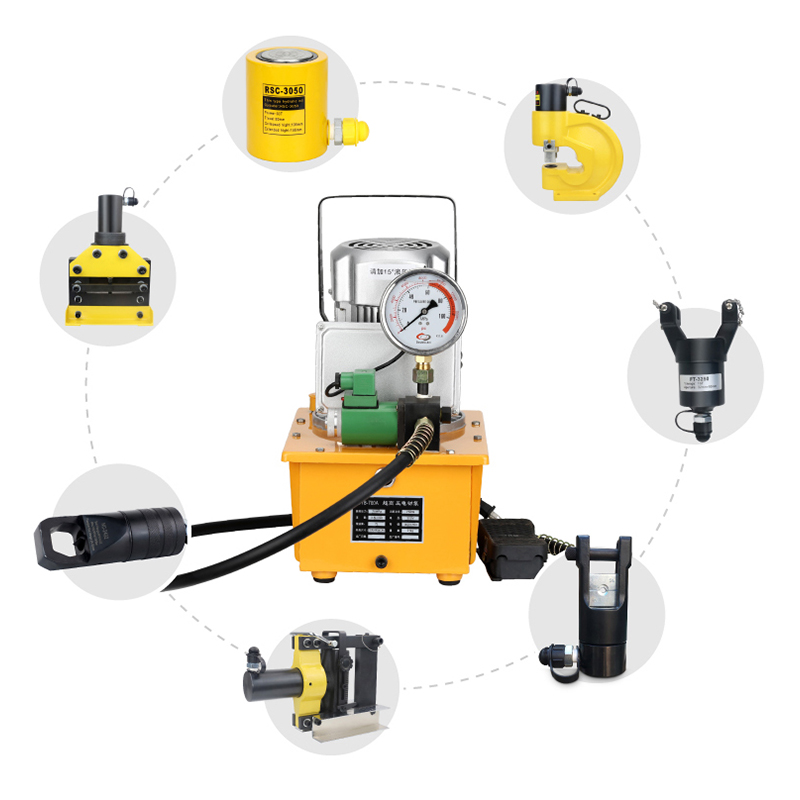
A hydraulic cylinder with electric pump should be specified as a coordinated hydraulic system rather than two independent components. The cylinder converts hydraulic pressure into linear force, while the pump supplies pressurized oil at the required flow rate. Their performance depends on how their specifications work together.
Our OEM discussions at Judun focus on the actual working conditions, interface requirements, and inspection arrangements behind each order. The following contract checklist explains which technical details deserve explicit confirmation before an electric hydraulic system enters production.
1. Define the Required Force, Pressure, and Stroke
Rated capacity alone cannot describe the complete operating requirements of a hydraulic cylinder. The contract should identify the load, movement distance, working pressure, and installation conditions for the intended application.
- Required force: State the intended pushing or pulling force, together with the expected load conditions and any relevant load distribution requirements.
- Working pressure: Specify the normal operating pressure and the system's permitted pressure range. The cylinder, pump, hoses, fittings, and valves must have compatible pressure ratings.
- Stroke length: Record the required cylinder travel in millimeters. Include the available installation height and the maximum extended dimension where space is restricted.
- Mounting dimensions: Confirm the cylinder body diameter, mounting points, connection positions, and surrounding clearances.
- Load direction: Clarify whether the cylinder performs lifting, pressing, pushing, pulling, or another linear movement.
These details establish the basis for matching the cylinder to the hydraulic power unit. At Judun, we recommend documenting the required operating conditions instead of relying solely on a model name or a general capacity description.
2. Specify Pump Pressure and Flow Rate Separately
Pressure and flow rate perform different functions within a hydraulic system. Pressure determines the force available at the cylinder, while flow rate affects the speed of cylinder movement. A pump with a suitable pressure rating may still fail to meet the required operating speed if its flow delivery is insufficient.
OEM contracts should identify the following pump specifications:
- Rated working pressure: State the required pressure in MPa or bar, and distinguish normal operation from the permitted pressure limit.
- Oil delivery: Specify the required flow rate in liters per minute (L/min), including the operating pressure at which the stated flow is expected.
- Motor power: Define the electrical motor rating according to the pump's pressure, flow, and expected operating cycle.
- Reservoir capacity: Confirm the usable oil volume and whether the tank configuration suits the cylinder's displacement and operating sequence.
- Pressure protection: Document the relief valve setting and the required safeguards against excessive system pressure.
For reference, Judun lists a 1.5 kW double-acting electric hydraulic pump with a 10-liter oil reservoir, a high-pressure rating of 70 MPa, and a low-pressure rating of 10 MPa. Its published high-pressure flow is 7.9 L/min, while its low-pressure flow is 1.7 L/min. The unit is available with 220 V or 380 V power configurations and a 50–60 Hz frequency specification.
These values describe that particular pump model, not every electric hydraulic power unit we offer. The contract should identify the agreed model and its applicable specification sheet so that the purchasing team and our production team work from the same technical reference.
3. Confirm Electrical Supply and Control Requirements
Electrical compatibility is an important part of OEM equipment integration. A pump that meets the hydraulic requirements may still be unsuitable for the customer's machine if its motor supply, control interface, or operating sequence differs from the installation design.
Our contract review should address the following electrical details:
- Supply voltage: Confirm the required voltage and phase configuration, including whether the installation uses a single-phase or three-phase supply.
- Frequency: Specify the applicable electrical frequency and confirm compatibility with the selected motor.
- Starting method: Identify the motor starting arrangement and any requirements related to starting current or external control equipment.
- Operating controls: Document the required switches, pedal controls, solenoid valves, and remote-control interfaces.
- Protection requirements: Agree on the necessary electrical protection, grounding arrangements, and applicable safety requirements for the destination market.
Control functions also need to match the cylinder design. A single-acting cylinder typically extends under hydraulic pressure and returns through a spring, gravity, or another specified external force. A double-acting cylinder uses hydraulic pressure to control both extension and retraction.
At Judun, we recommend identifying the intended movement sequence in the contract. For example, the document should explain whether the operator needs manual switching, pedal operation, or another approved control arrangement. This makes the electrical and hydraulic interfaces easier to verify before delivery.
4. Document Cylinder and Pump Compatibility
Mechanical and hydraulic connections deserve the same attention as pressure and motor specifications. An OEM assembly may require a particular cylinder port, hose length, fitting thread, mounting arrangement, or oil capacity. These requirements should be documented before the components are matched.
Our compatibility review should include:
- Connection threads: Identify the required thread standard, size, and connection type. Avoid relying on visual similarity between fittings.
- Hydraulic hoses: Confirm hose pressure ratings, connection dimensions, routing requirements, and the working length needed for the installation.
- Oil volume: Calculate the cylinder's oil demand from its effective piston area and stroke, then consider the circuit and operating arrangement.
- Return method: Confirm whether the cylinder returns through spring force, gravity, or powered hydraulic retraction.
- Fluid specification: State the approved hydraulic oil type and its relevant operating temperature range.
Long-stroke and multi-section cylinders require additional dimensional checks. Their retracted height, total extension, stage configuration, and load conditions affect how the assembly fits into the customer's equipment. A compact cylinder body does not automatically mean that the complete system will fit every restricted installation space.
Our Ultra-Thin Multi-Section Stroke Hydraulic Cylinder is a relevant product reference for applications requiring a compact cylinder structure with multi-section extension. The exact model dimensions and operating specifications should be confirmed against the selected product documentation before an OEM agreement is finalized.
5. Include Operating Cycle and Duty Requirements
Hydraulic equipment does not always operate under the same workload. Some machines perform occasional lifting operations, while others repeat extension and retraction cycles throughout a working shift. The OEM contract should describe the expected duty rather than treating every application as continuous operation.
We recommend documenting these operating conditions:
- Cycle frequency: Specify the expected number of operating cycles per hour or shift.
- Movement duration: Define the required extension and retraction times under the agreed load conditions.
- Operating temperature: Identify the expected ambient and hydraulic oil temperature ranges.
- Rest periods: State whether the motor operates intermittently or must support a defined continuous-duty cycle.
- Installation environment: Record exposure to dust, moisture, vibration, or other conditions that influence enclosure and component requirements.
These details help us assess the relationship between motor capacity, pump delivery, reservoir volume, and expected heat generation. They also provide a common reference for evaluating the equipment under representative operating conditions.
6. Establish Inspection and Acceptance Criteria
A complete OEM contract should explain how the buyer and supplier will determine whether the delivered equipment meets the agreed requirements. General wording such as “good quality” or “suitable for industrial use” leaves too much room for different interpretations.
At Judun, we recommend defining measurable inspection points that relate directly to the product and application.
- Dimensional inspection: Confirm the specified cylinder dimensions, mounting points, ports, and external interfaces.
- Pressure testing: Identify the applicable test procedure, test pressure, duration, and acceptance limits according to the product design and relevant requirements.
- Functional testing: Verify extension, retraction, control response, and operation under the agreed test conditions.
- Leakage inspection: Define the inspection method and acceptable leakage criteria for the hydraulic circuit and connections.
- Documentation: Specify which inspection records, operating instructions, drawings, and product documents must accompany the order.
- Packaging requirements: Record the agreed packaging method, product identification, shipping labels, and protection for transport.
Acceptance criteria should reflect the actual design and applicable standards. A pressure test, for example, should not be assigned an arbitrary value without checking the rated limits of the components and the prescribed test method.
OEM buyers should also agree on the procedure for handling nonconforming products, including notification, evidence requirements, corrective action, and responsibility for any additional inspection.
7. Clarify Customization, Drawings, and Contract Changes
Customized hydraulic equipment often involves several rounds of technical communication. Changes to a cylinder stroke, mounting dimension, hose connection, motor voltage, or control arrangement may affect other parts of the assembly. A documented change-control process helps both parties maintain a consistent design reference.
We suggest including the following commercial and technical provisions:
- Approved drawings: Identify the drawing revision that governs production and inspection.
- Customization scope: List the agreed modifications, including dimensional changes, connection requirements, electrical configurations, and labeling.
- Change approval: Require written confirmation of changes affecting performance, cost, delivery arrangements, or acceptance criteria.
- Delivery schedule: State the agreed production milestones, inspection dates, shipping arrangements, and delivery commitments in the contract.
- Warranty and support: Define the warranty period, covered components, claim procedure, and technical support responsibilities.
These provisions are particularly useful for OEM customers purchasing repeated batches or integrating hydraulic equipment into a larger machine platform. An approved specification sheet and drawing set provide a shared basis for handling future orders and authorized revisions.
8. OEM Contract Checklist for Hydraulic Equipment Buyers
Before confirming an order with Judun, purchasing and engineering teams can use the following checklist to review the essential requirements.
- [ ] Cylinder capacity, stroke, mounting dimensions, and operating direction are documented.
- [ ] Pump working pressure and flow rate are confirmed for the intended operating conditions.
- [ ] Motor voltage, frequency, power rating, and control configuration match the installation.
- [ ] Hydraulic ports, hose connections, oil type, and reservoir requirements are agreed upon.
- [ ] Duty cycle, movement speed, and operating temperature requirements are specified.
- [ ] Inspection procedures, test records, and acceptance criteria are documented.
- [ ] Approved drawings, packaging details, warranty terms, and change-control procedures are included.
Completing this review gives both parties a clearer picture of the equipment configuration before production begins. It also helps the purchasing team compare quotations on an equivalent technical basis instead of evaluating price without considering the full scope of supply.
Build a Clear Technical Agreement with Judun
At Judun, we approach OEM hydraulic equipment orders by connecting product specifications with the customer's intended application. Pressure, flow rate, cylinder travel, motor supply, hydraulic connections, and inspection requirements need to work together as a defined system.
Our range includes hydraulic cylinders, hydraulic jacks, manual pumps, and electric hydraulic pumps for different industrial tool applications. Each project requires confirmation of the relevant model specifications, operating conditions, and interface requirements before the final configuration is agreed upon.
Share your application details, required cylinder stroke and capacity, operating pressure, electrical supply, and control preferences with our team. We can review the available product configuration and discuss the technical information needed for your OEM quotation. A well-documented contract gives both sides a practical reference for production, inspection, delivery, and subsequent equipment integration.
Don't miss out. Contact us to get the latest information!

Products
Contact US
Taizhou Judun Tools Co., Ltd.
Jungang Village, Chumen Town, Yuhuan City, Zhejiang Province
Tel: +86-13967698556
E-mail: judungongju@163.com
Copyright © Taizhou Judun Tools Co., Ltd.. All rights reserved.
