 en
 Español
 عربى

News ·
News ·
News ·
News ·
News ·
News ·
News ·
News ·
News ·
News ·
News ·
News ·
News ·
News ·
News ·
News ·

Posted by JUDUN
Custom or Standard Hydraulic Jacks: Which Option Fits Special Lifting Points
Special lifting points can make hydraulic jack procurement more complicated than expected. Limited installation clearance, unusual support surfaces, extended travel requirements, and restricted access may prevent a standard jack from fitting the equipment as intended. At Judun, we help buyers evaluate these practical constraints before deciding whether a standard model or a customized configuration suits their application.
A long stroke hydraulic jack can support applications requiring substantial cylinder travel, but stroke length alone does not determine suitability. Rated capacity, closed height, mounting arrangement, load alignment, and available operating space must also be considered. Reviewing these factors together gives OEM buyers and industrial distributors a clearer basis for purchasing decisions.
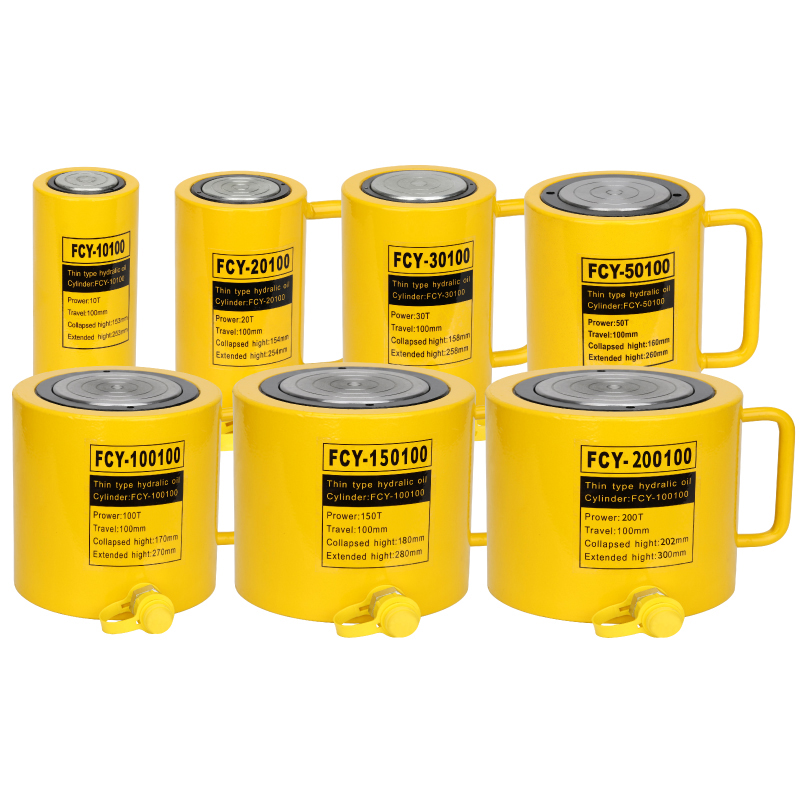
1. When Does a Standard Hydraulic Jack Make Sense?
Standard hydraulic jacks are suitable for projects where existing product dimensions and performance ratings satisfy the installation requirements. Using an established model can simplify specification review and replacement planning.
- Common lifting positions: The jack can be placed securely beneath the designated support point.
- Known capacity requirements: The rated load matches the application, including the relevant load distribution and operating conditions.
- Sufficient clearance: The retracted height and extended dimensions fit the available installation space.
- Established interfaces: Hydraulic connections and pump compatibility meet the existing system requirements.
At Judun, we recommend comparing the actual installation measurements with the product specification sheet before confirming an order. A familiar model name does not guarantee dimensional compatibility across different equipment designs.
2. When Should Buyers Consider Customization?
A customized hydraulic jack may be worth evaluating when standard dimensions cannot accommodate a specific lifting point or working sequence. The objective is to address a defined engineering requirement rather than modify a product without a clear reason.
- Restricted installation height: A low-profile configuration may be necessary where the jack must enter a narrow gap.
- Unusual stroke requirements: The required lifting distance may differ from available standard models.
- Special mounting interfaces: The support surface, mounting arrangement, or connection position may require a specific design.
- Equipment integration: OEM machinery may require defined external dimensions or hydraulic connections to fit an existing structure.
Customization should still respect structural strength, pressure ratings, stability, and the manufacturer's operating limits. Changes to stroke or mounting geometry can affect the overall design, so technical review is necessary before production approval.
3. Compare the Specifications That Affect Fit
Our purchasing discussions at Judun focus on measurable requirements rather than relying on the terms “standard” or “custom” alone.
| Evaluation Item | Standard Jack | Custom Jack |
| Dimensions | Uses an established configuration | Can address approved dimensional requirements |
| Stroke | Limited to available model specifications | May be tailored to the application |
| Installation | Suitable when existing interfaces match | Can accommodate defined interface differences |
| Procurement | Usually requires less engineering coordination | May require drawings, design review, and additional validation |
| Cost assessment | Based on an established product configuration | Includes the agreed customization scope |
Actual pricing and production schedules depend on the model, materials, design changes, inspection requirements, and order details. We recommend requesting a quotation based on the same technical requirements before comparing alternatives.
4. Check Load Alignment and Operating Safety
A jack that fits beneath a lifting point is not necessarily suitable for the load conditions. The support surface must be stable, and the applied force should remain within the equipment's rated limits. Side loading, uneven contact, and an unsuitable support structure can create serious hazards.
Before approving a configuration, we recommend confirming:
- The total load and the load assigned to each lifting point.
- The required stroke and the available clearance throughout the movement.
- The support surface, jack alignment, and stability of the structure.
- The compatible hydraulic pump, hose connections, and rated working pressure.
- The required mechanical supports for holding a raised load safely.
Hydraulic pressure should never be increased beyond the approved system rating to compensate for an unsuitable jack. Raised loads must be secured using an appropriate independent support method rather than relying solely on hydraulic pressure.
5. Prepare the Right Information for a Quotation
Accurate application information helps us assess whether an existing Judun model can meet the requirement or whether a customized solution needs further review. Buyers can prepare the following details before requesting a quotation:
- Required lifting capacity and stroke length.
- Available installation height and maximum extended dimensions.
- Photographs, drawings, or measurements of the lifting points.
- Pump type, operating pressure, and connection requirements.
- Expected operating conditions and applicable inspection requirements.
Discuss Your Lifting Requirements with Judun
At Judun, we evaluate hydraulic jack requirements according to the intended application, dimensional restrictions, rated load, and system compatibility. A standard model is a practical option when its specifications match the installation, while customization deserves consideration when special lifting points introduce requirements that existing models cannot satisfy.
Visit Judun to explore our hydraulic tool range or contact our team with your drawings and operating requirements. We can review the relevant product specifications and help identify the information needed to assess a suitable hydraulic jack configuration for your project.
Don't miss out. Contact us to get the latest information!

Products
Contact US
Taizhou Judun Tools Co., Ltd.
Jungang Village, Chumen Town, Yuhuan City, Zhejiang Province
Tel: +86-13967698556
E-mail: judungongju@163.com
Copyright © Taizhou Judun Tools Co., Ltd.. All rights reserved.
