 en
 Español
 عربى

News ·
News ·
News ·
News ·
News ·
News ·
News ·
News ·
News ·
News ·
News ·
News ·
News ·
News ·
News ·
News ·

Posted by JUDUN
What Can a Hollow Hydraulic Jack Do Beyond Lifting
Hydraulic jacks are mostly known for lifting loads. A hollow hydraulic cylinder jack works in a different way. It has a hole through the center of the piston. This allows a threaded rod, an anchor bolt, a cable or some other part to pass through it. Of just pushing on the end of something this type of jack can apply force directly along the centerline of the component.
This kind of design changes what a hydraulic jack can do. It moves beyond lifting into pulling, tensioning, testing and pulling things out. The center hole is not a small detail. Its size how far it can move (stroke) how weight it can handle (rated capacity) and how it connects (mounting arrangement) all decide what jobs the cylinder can take on.
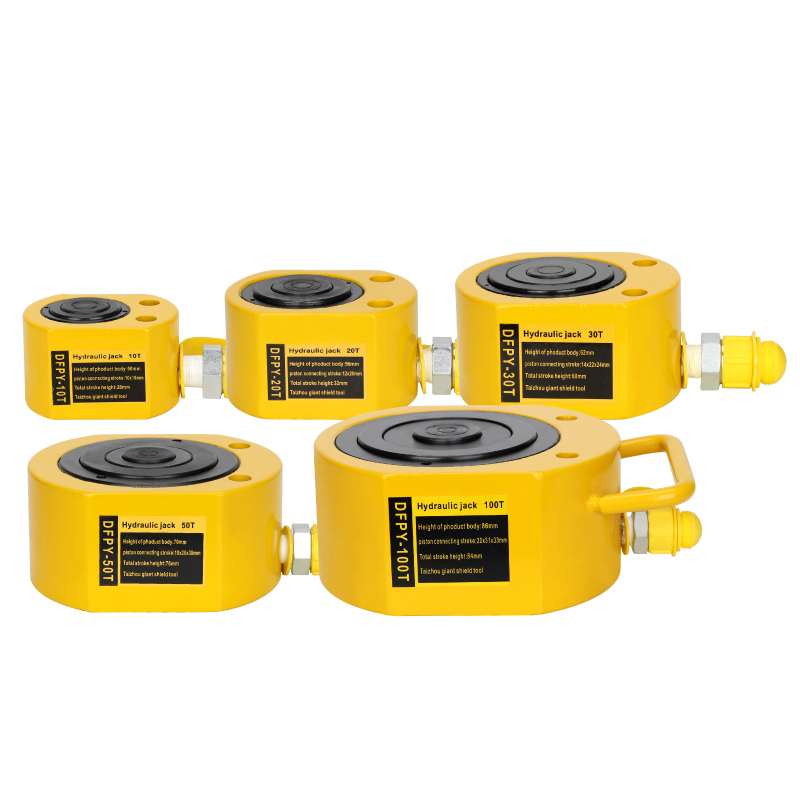
1. Pulling Becomes Possible Through the Center
Standard hydraulic cylinders push from the piston surface. Hollow ones add a hole that runs all the way through. That lets rods, cables or bolts go through the middle.
- Anchor bolt pulling: A threaded rod goes through the center. Hydraulic pressure then pulls it back.
- Cable tensioning: Cables or tendons can be tightened along the center of the cylinder.
- Rod extraction: Long rods can be pulled out without having to fit them inside the jack.
- Forcing operations: Components with threads can be. Pulled through the open center using controlled force.
Technical documents often describe these center-hole cylinders as being good, for pulling and tensioning tasks. The hole lets a rod or cable run through. So the cylinder can create tension of just compression.
2. Center Hole Diameter Can Decide the Application
Capacity alone does not tell you whether a hollow hydraulic cylinder jack will work for a particular job. The internal hole must be large enough for the rod, bolt, cable, or tooling passing through it.
- Center hole diameter: Defines the maximum practical size of the pass-through component.
- Stroke: Determines how far the cylinder can pull or push during each hydraulic cycle.
- Rated capacity: Indicates the available hydraulic force under specified operating conditions.
- Working pressure: Must match the hydraulic pump and complete system.
Published specifications demonstrate the range available. One center-hole cylinder series covers 10 to 100 tons, with strokes from 7.9 to 203.2 mm and maximum working pressure up to 70 MPa. Center-hole dimensions vary between models, so the actual rod or bolt diameter should be checked against the specification before installation.
3. Can It Handle Bolt Tensioning?
Yes, bolt tensioning is a natural application for this cylinder configuration. The bolt or threaded rod passes through the hollow piston, while the cylinder body reacts against a suitable support surface. Hydraulic pressure then creates axial force along the fastener.
This arrangement can be useful for large structural bolts that require controlled tension rather than conventional torque-based tightening. Public product information also identifies anchor bolt tensioning and anchor rod installation among applications for high-capacity center-hole cylinders.
The important factor is alignment. The cylinder, fastener, and reaction surface should remain properly aligned so the hydraulic force follows the intended load path.
4. Extraction Is Another Important Use
Removing tightly fitted components can require substantial axial force. A hollow design allows pulling tools to work around a shaft, rod, bearing, or sleeve instead of pushing against an inaccessible surface.
- Bearing removal: Hydraulic force can assist controlled extraction of bearings and similar fitted parts.
- Bushing extraction: Hollow cylinders can work with pulling rods to remove bushings from machinery.
- Shaft pulling: Through-hole access helps maintain force along the shaft axis.
- Sleeve removal: Pulling tools can be combined with the cylinder for difficult interference-fit components.
Product documentation for hollow hydraulic cylinders lists bushing extraction, maintenance pulling, and bearing-related work alongside tensioning applications.
5. Load Testing Adds Another Dimension
Center-hole cylinders can also be used in applications that require controlled tensile loading. Anchor testing and structural testing can use the cylinder to apply measurable hydraulic force to a rod or anchor assembly.
Some specialized center-hole systems are designed specifically for anchorage pull-out testing, with configurations reaching 200 tons capacity, 200 mm stroke, and 63.7 MPa working pressure. Such equipment may be combined with pressure gauges, hoses, connectors, and anchorage tooling as part of a complete testing setup.
6. Push and Pull From the Same Cylinder
Hollow construction does not remove the conventional pushing function. Many center-hole cylinders can still provide lifting or compression force, giving the same hydraulic component two distinct working modes.
Single-acting versions commonly use spring return, while double-acting configurations can provide hydraulic control during both extension and retraction. Product ranges also vary considerably in capacity, stroke, center-hole diameter, and mounting features.
The real advantage of a hollow hydraulic cylinder jack is the additional load path created by its center opening. Lifting remains useful, but pulling, tensioning, testing, bearing removal, bushing extraction, and anchor work can make the same hydraulic principle far more versatile.
Before using one, check the required force, stroke, center-hole diameter, operating pressure, rod or cable dimensions, and reaction surface. Those specifications determine whether the hollow design can perform the intended task safely and effectively.
Don't miss out. Contact us to get the latest information!

Products
Contact US
Taizhou Judun Tools Co., Ltd.
Jungang Village, Chumen Town, Yuhuan City, Zhejiang Province
Tel: +86-13967698556
E-mail: judungongju@163.com
Copyright © Taizhou Judun Tools Co., Ltd.. All rights reserved.
